
Margaret: A Southern Lady at Leisure
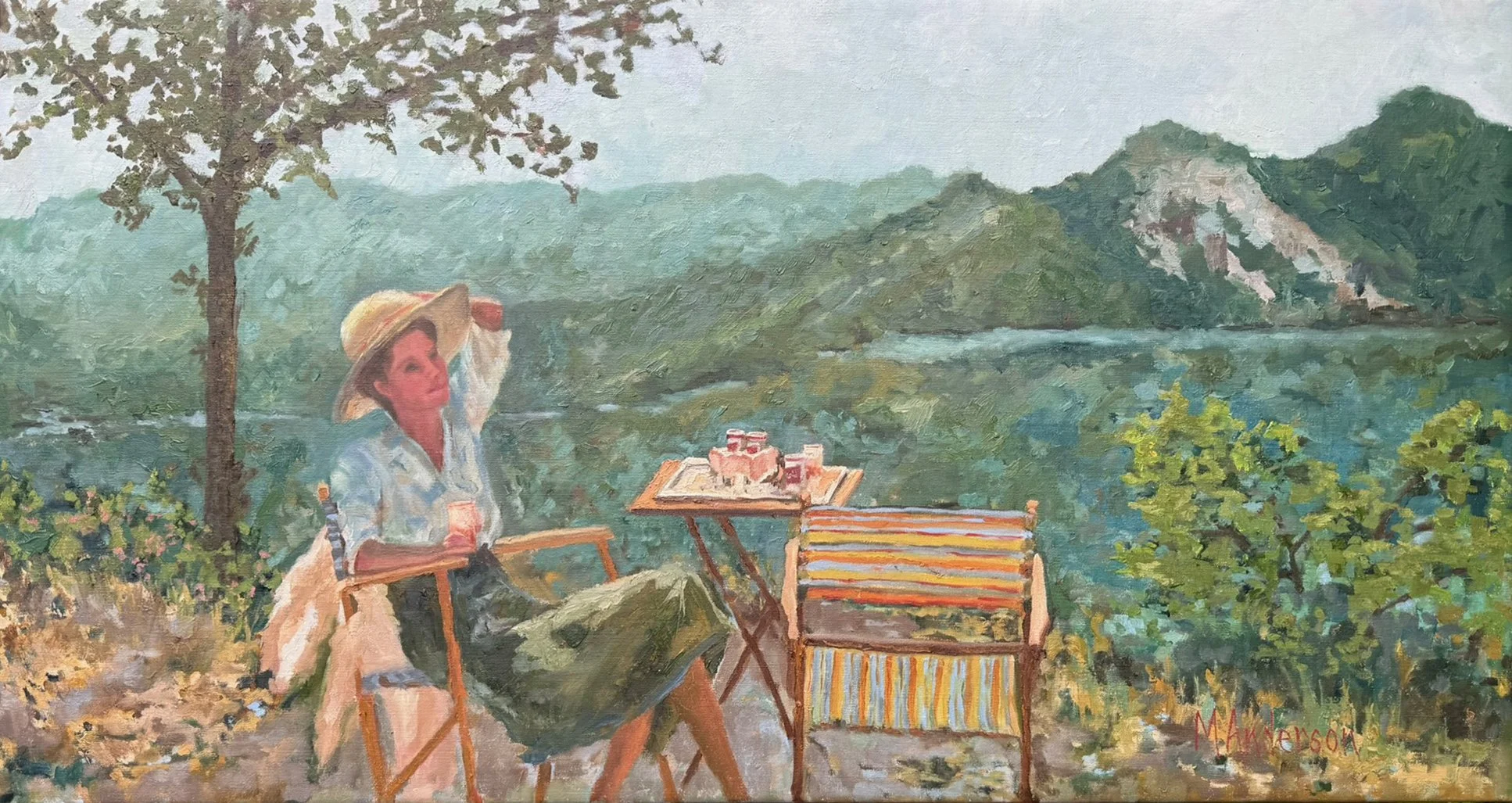
“Margaret” | 26x54” | Oil on Canvas
There are some people whose lives become inseparable from the history of a place. Margaret Watson was one of them.
A Coker from Hartsville, Margaret came from one of South Carolina’s established families. Her family’s story reached from the plantations and farmland of the Pee Dee to the growth of Columbia, where generations of Coopers helped shape the land and communities that would become some of the city’s most distinguished neighborhoods.
But Margaret’s story is particularly tied to the mountains.
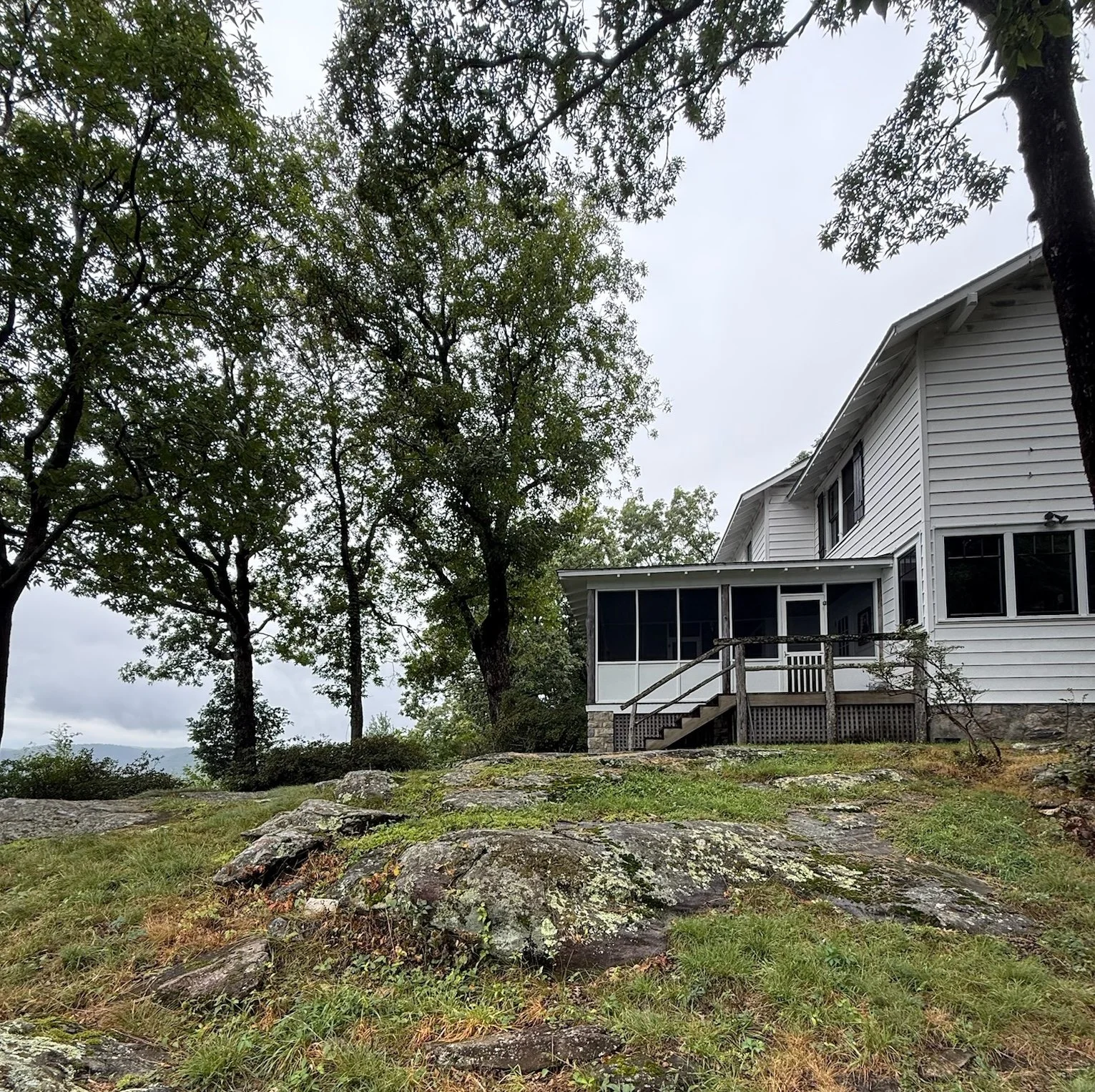
The family home at Caesar’s Head
Her father built the family’s Caesar’s Head house, completed in 1920. From that home, he could watch the construction of the Table Rock reservoir. If he saw something he thought needed attention, he would ride horseback down toward Cedar Mountain to telegraph the company overseeing the work.
For Margaret, Caesar’s Head was not simply a summer destination. It was home.
She swam in a nearby lake every day. She remained an avid hiker well into her nineties, hiking until she was 94. She lived to 96.
She was also a woman of remarkable character—proper and refined, but with a mischievous sense of humor and a fiercely independent spirit. She loved gardening and opera, listened to the morning concert on NPR, and was part of the early conservation movement in South Carolina through the Greenville garden clubs.
The part of her story I’ll focus on here is the one that cannot be captured by family names, houses, or land records. Margaret raised her grandson, Edwin.
Edwin lived with his grandparents in Columbia and thanks his lucky stars that they enrolled him in boarding school. He has described himself as “feral” as a boy, but Margaret was one of the constants in his life. Their bond remained extraordinarily close throughout her life.
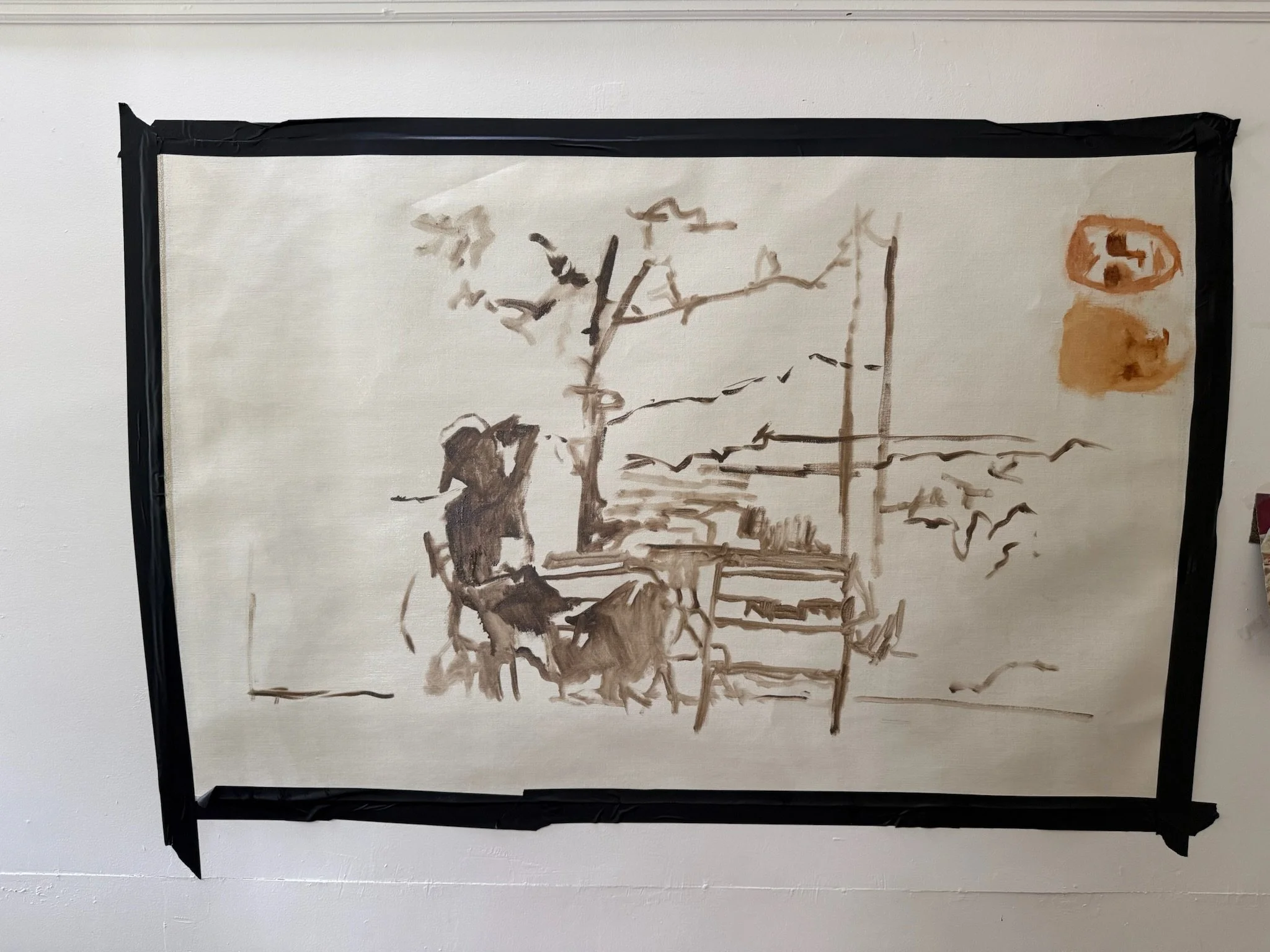
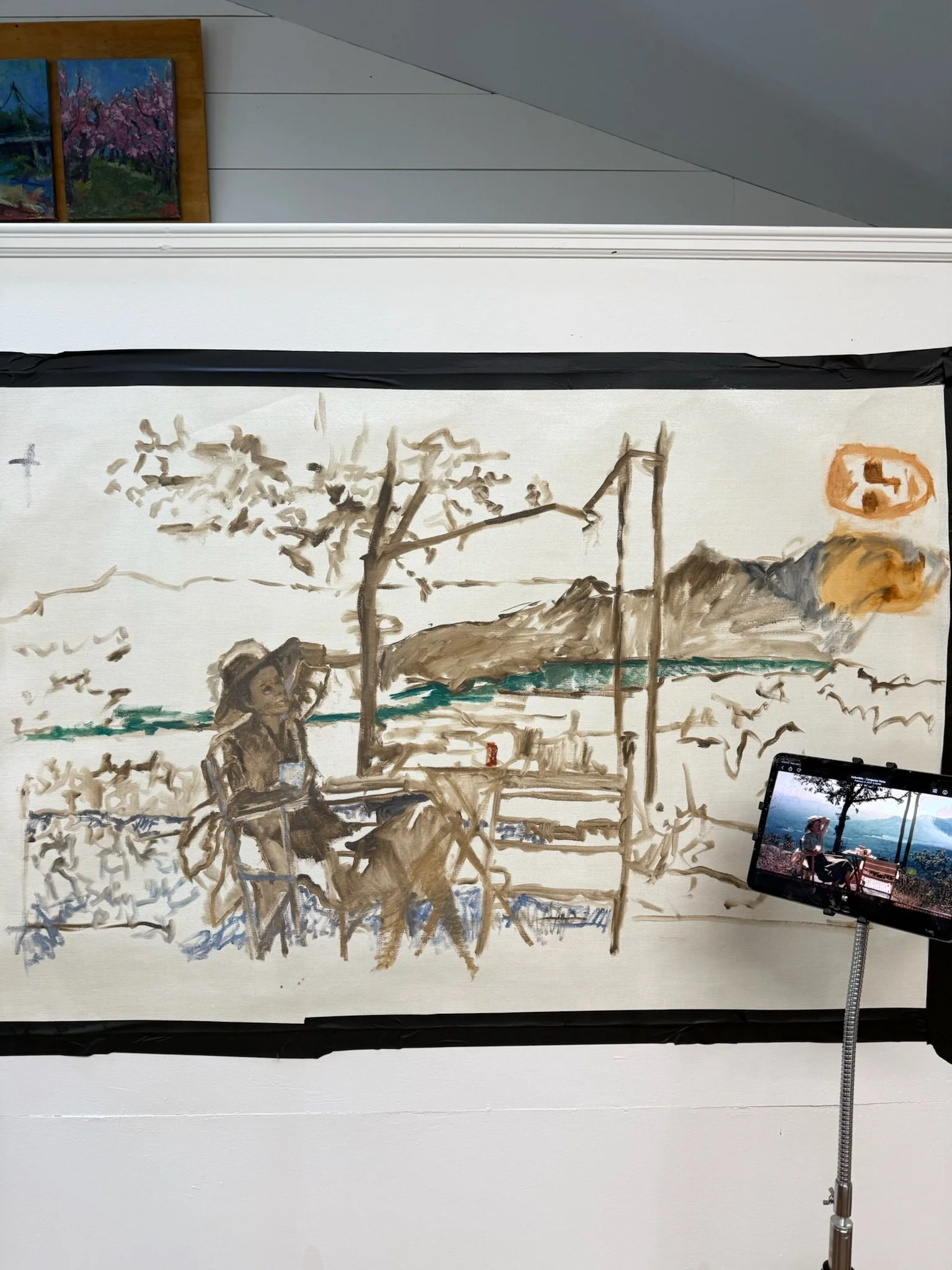
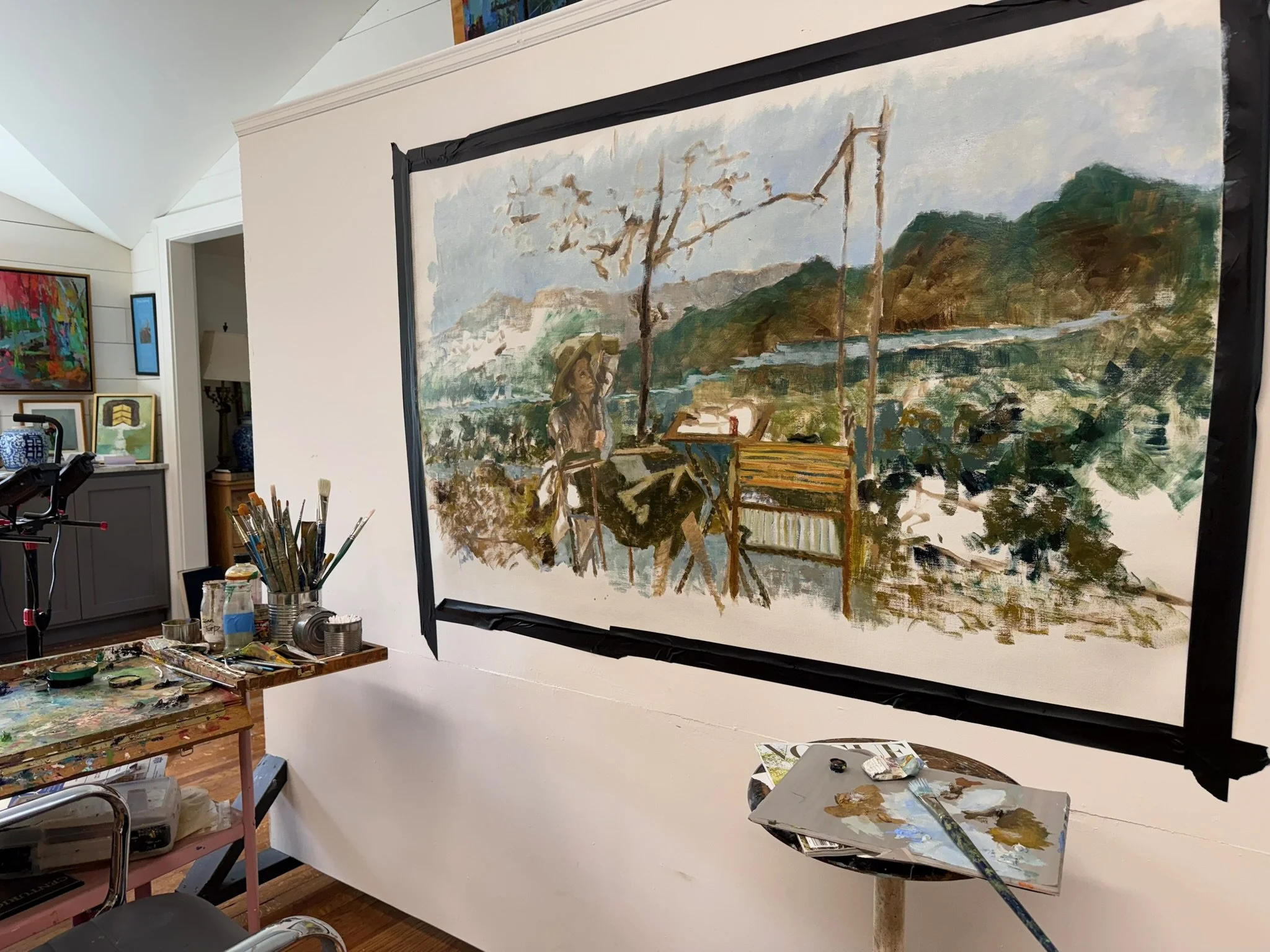
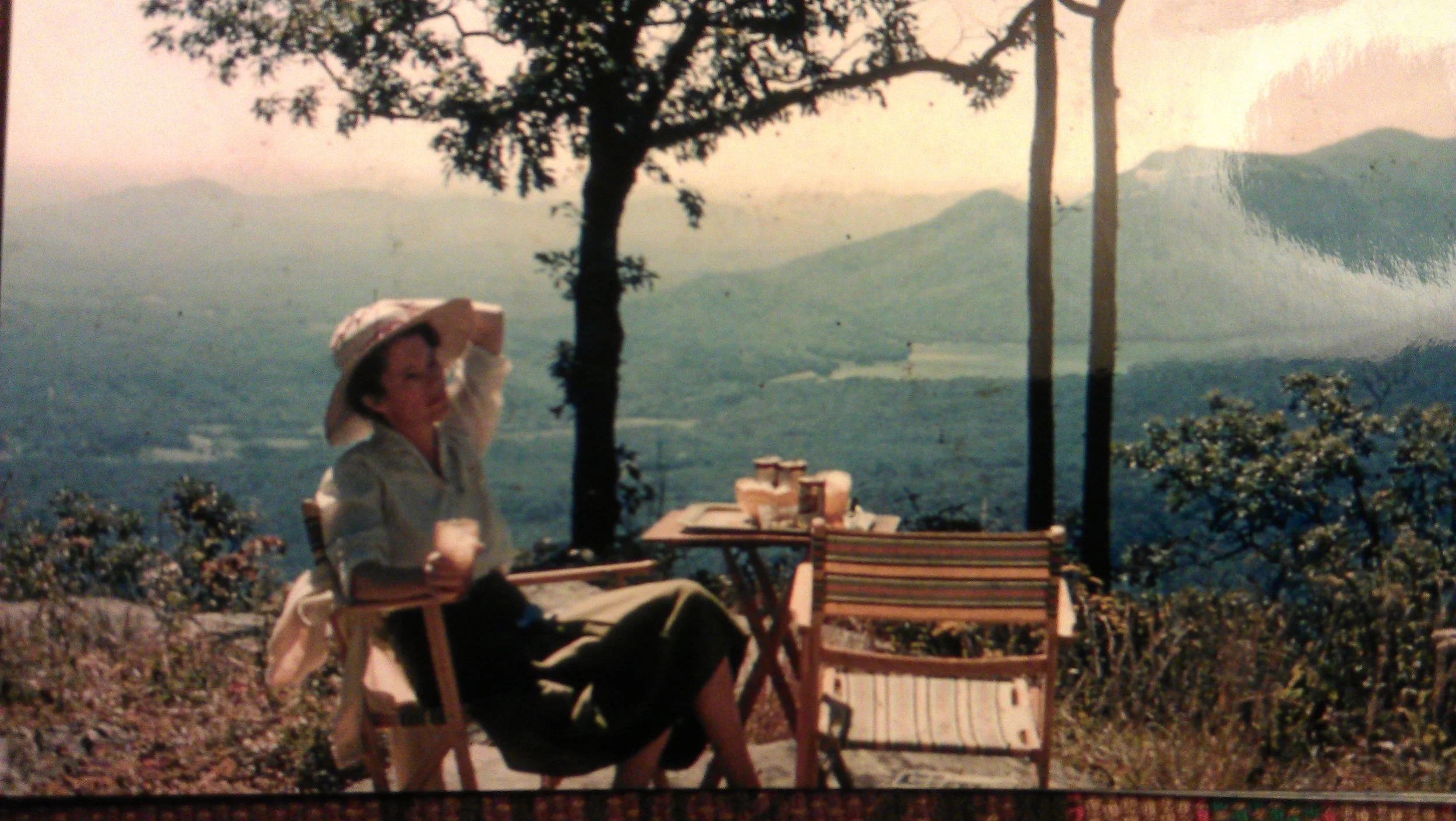
Margaret and her husband were together for 60 years. He was famously proper, wearing a tie every day, even while cutting the grass. Margaret, equally memorable in her own way, jokingly threatened to divorce him on a daily basis. Yet the two were deeply devoted to one another, even taking their daily afternoon respite together.
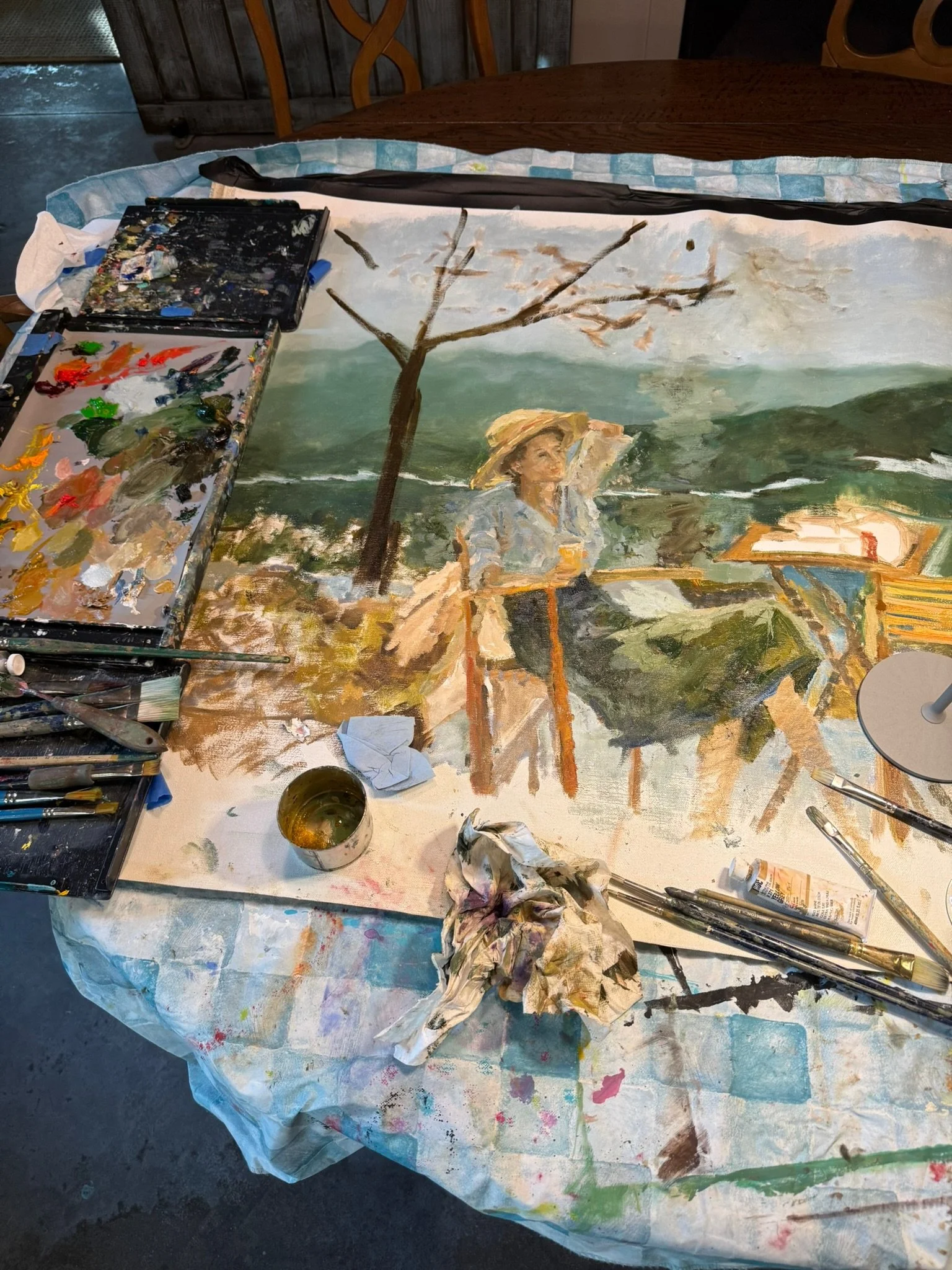
This painting places Margaret where so much of her story unfolded: above Caesar’s Head, looking out over the landscape that connected her family, her memories, and generations of South Carolina history.
It is a portrait of Margaret, but it is also a portrait of place, family, and legacy of a woman who belonged to an important chapter of South Carolina's history and whose influence lived on most profoundly through the family she raised.
On many days, you could find her just like she’s seen in the painting, taking her leisure at the Caesar’s Head home, surrounded by the landscape she loved.