Solving the Painting (Or Changing the Problem)
I am a problem solver.
That sounds like a good thing. It usually is. But in the studio, it can get a little exhausting.
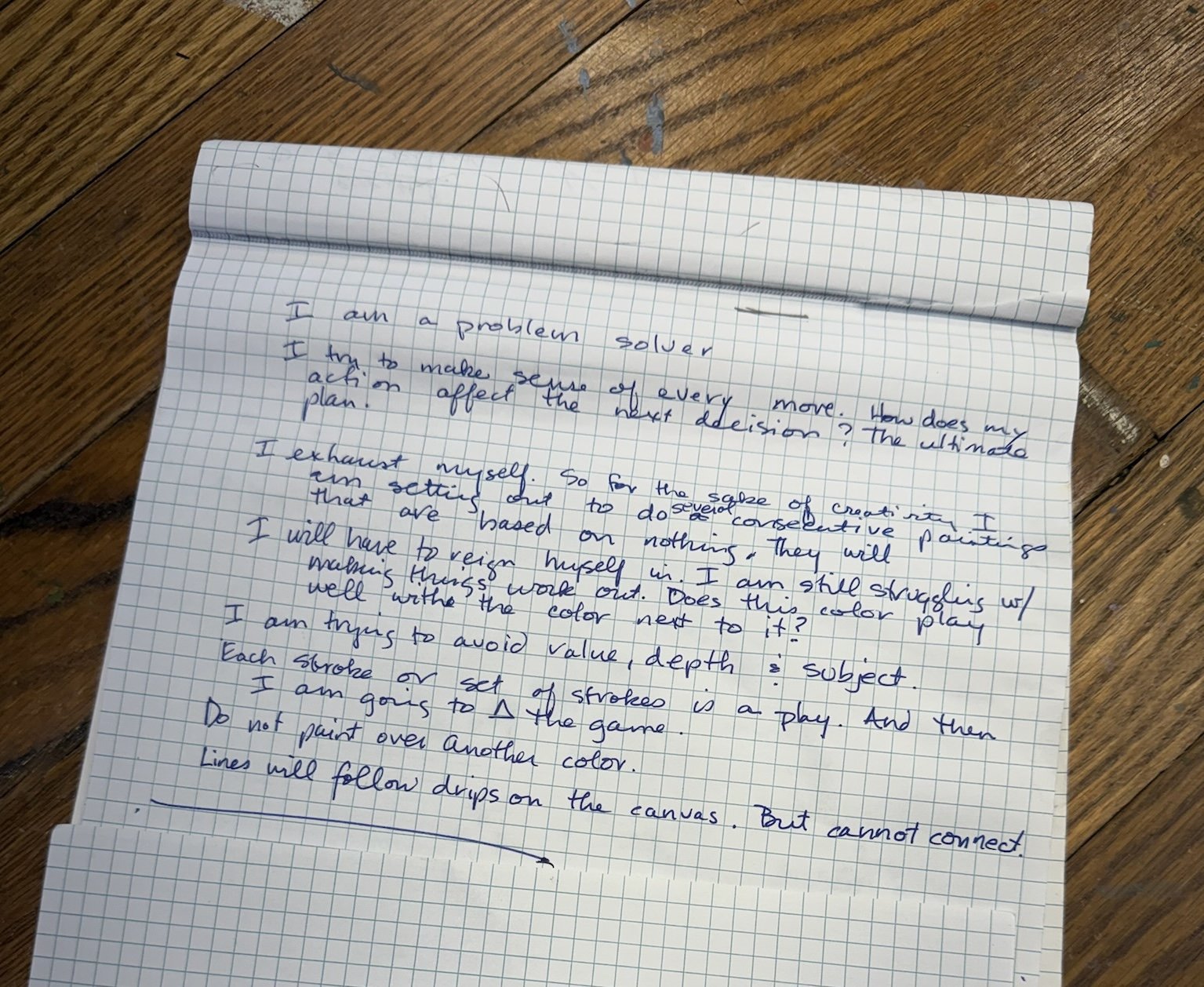
My notes on problem solving — good luck deciphering!
All painting is problem-solving.
Even when I'm painting loosely or abstractly, every mark creates a new question. Does this color belong next to that one? Should this shape continue or stop? How does one decision affect the next? Every brushstroke changes the painting and every change demands another decision.
I find myself constantly trying to make sense of it all. And eventually, I wear myself out.
Lately, I've been interested in changing the kind of problems I'm trying to solve. Not because I've stopped caring about composition, color, or design. Quite the opposite. But instead of beginning with a subject and figuring out how to make it work, I've been creating paintings that start with a different set of questions altogether.
For the sake of creativity, I've set out to do a series of paintings based on almost nothing. No story. No predetermined outcome. No expectation that the painting has to arrive anywhere specific.
The Freedom of Rules
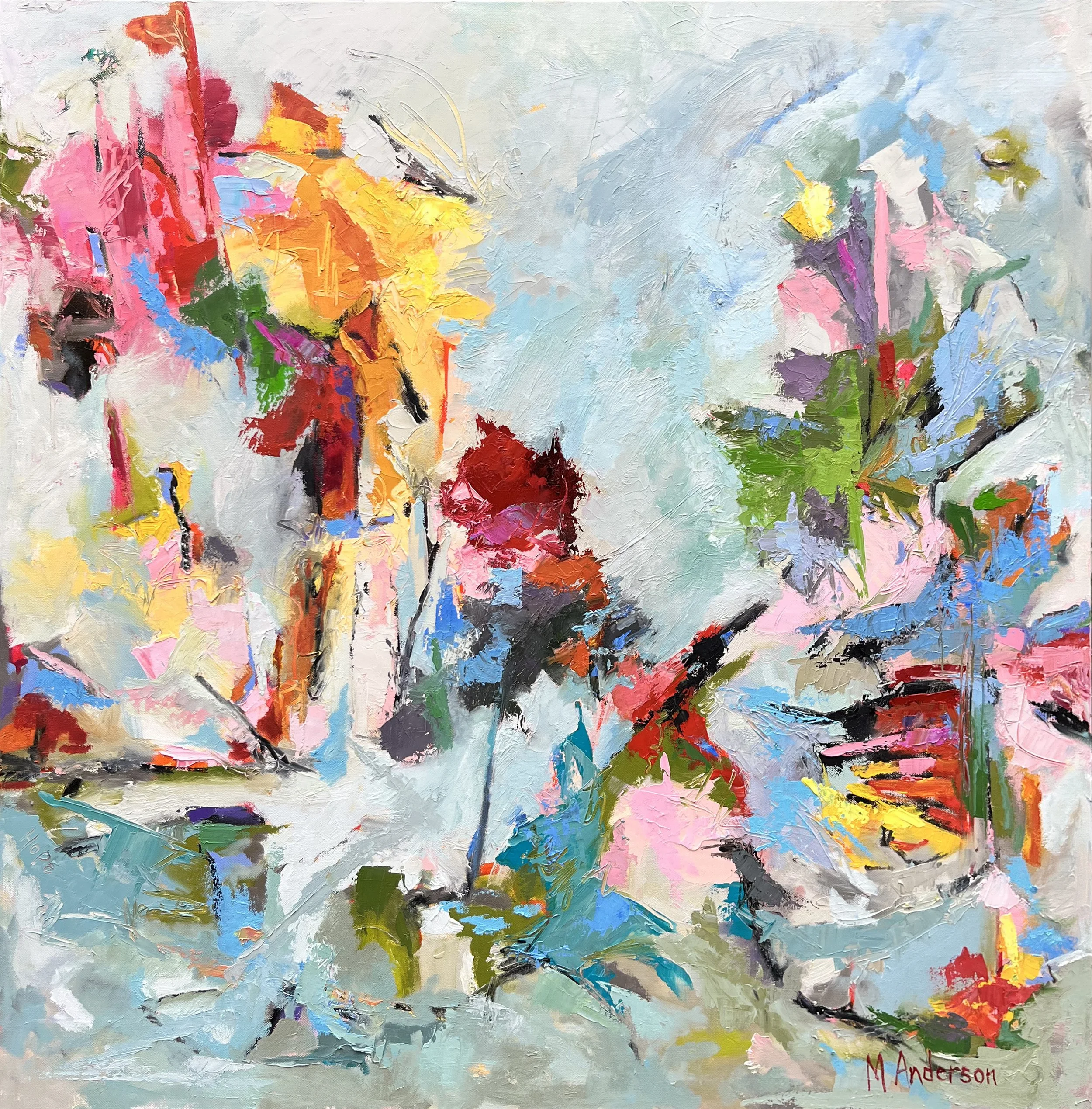
Because I Can | 36×36” | Oil on Canvas (SOLD)
Of course, even when I try to let go, I end up making rules. I can't help myself.
Do not paint over another color.
Lines can follow drips on the canvas, but they cannot connect.
Avoid creating obvious depth.
Let each stroke become a play rather than a correction.
The freedom doesn't come from having no rules. The freedom comes from choosing the rules myself.
People often talk about thinking outside the box, but first you have to know where the box is. I don't break all the rules. In fact, most of the time I'm following a plan. The difference is that the plan changes from painting to painting.
Every painting becomes a new game.
No Blue in the Sky
Sometimes all it takes is one rule to force a new way of seeing.
This Is My Tribute began with a challenge I often give myself: resist the obvious answer.
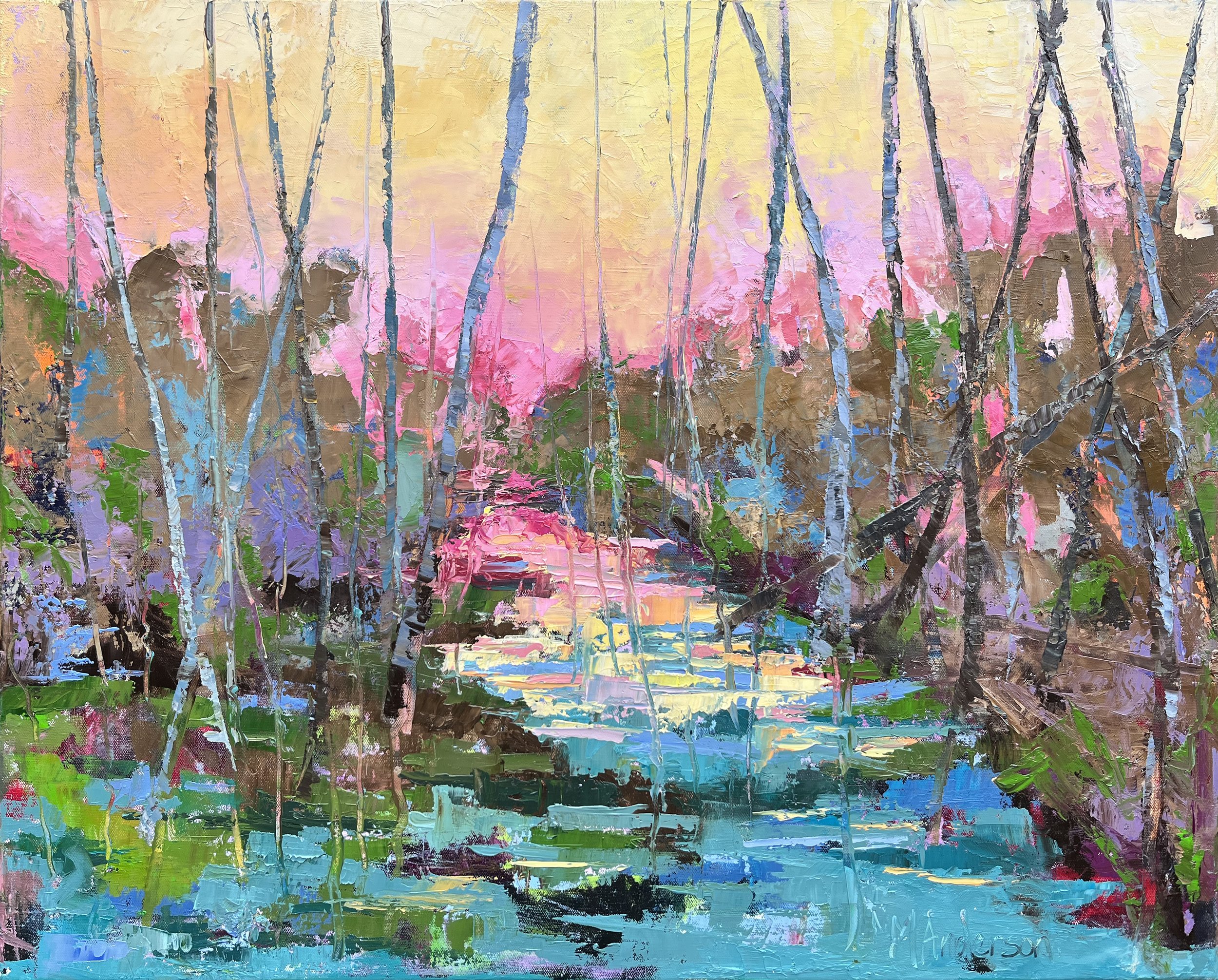
This Is My Tribute | 24×30” | Oil on Canvas (SOLD)
A while back, I started asking a simple question: How do you paint a sky without blue?
It sounds like a small thing, but limitations have a way of opening doors. When blue is no longer an option, you begin to notice all the other colors that live in the sky—soft golds, lavenders, pinks, and pale yellows that are often overshadowed by what we expect to see.
The obvious answer would have been to paint the landscape exactly as I saw it. Instead, I asked a different question.
What if color could describe a feeling instead of a place?
What if the landscape became less about documentation and more about interpretation?
The result is a scene built from unexpected combinations of turquoise, lavender, pink, and gold. The colors aren't trying to imitate nature as much as capture the experience of it. The reflections glow. The trees become lines. The water carries color through the composition, creating movement and connection from foreground to horizon.
Sometimes we get stuck because we're looking at something the same way we've always looked at it. The solution isn't always to work harder. Sometimes it's to change perspective. What if the sky isn't blue? What if the sunset holds more color than seems possible? What if a landscape becomes a tribute not to a specific place, but to the feeling of being there?
The moment you change the question, the answers begin to change too. And this painting is my tribute to that idea.
Making Better Problems
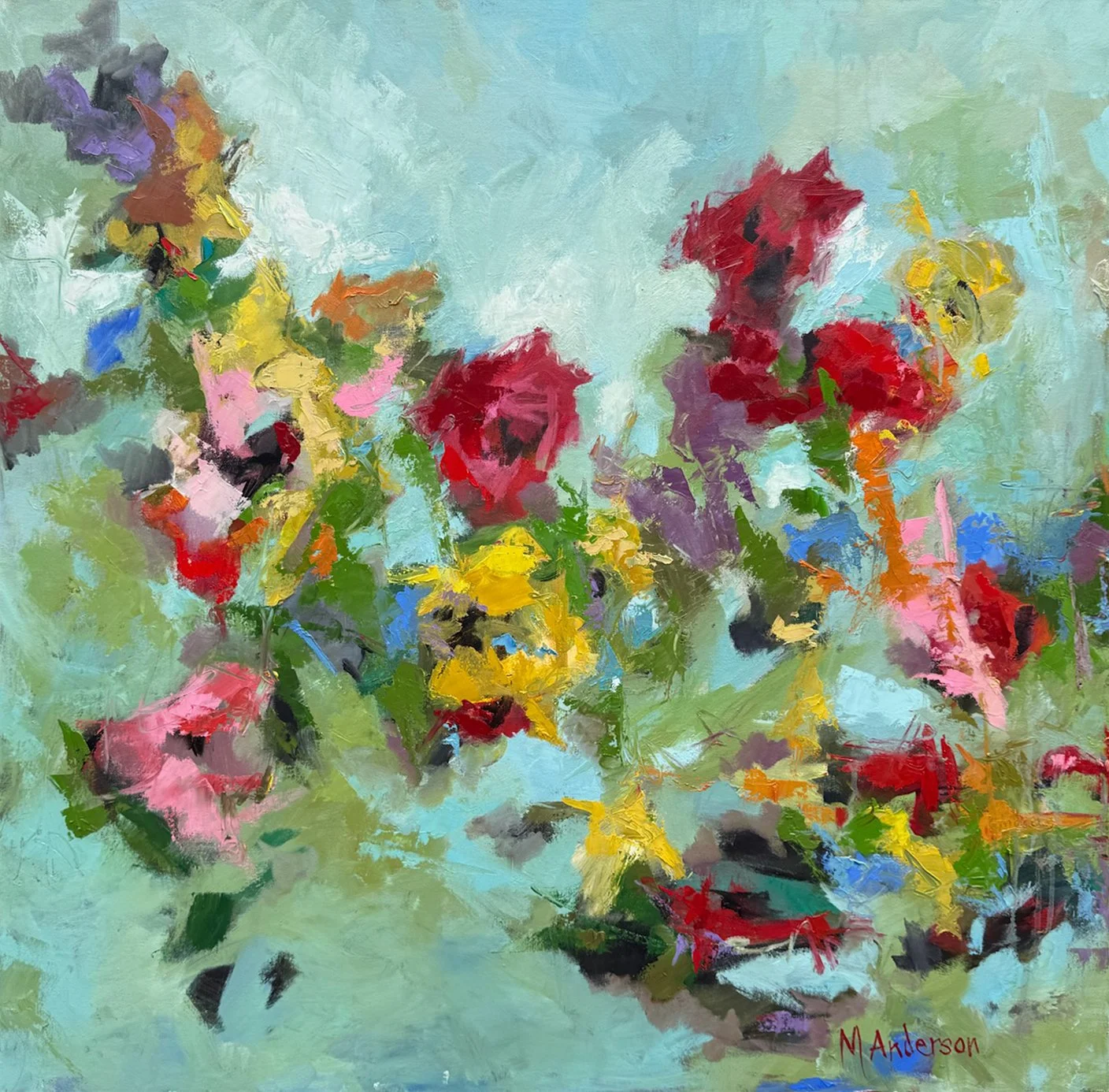
Maybe I Want To | 36×36” | Oil on Canvas (SOLD)
I don't think I'll ever stop being a problem solver. That's part of how I'm wired, and honestly, part of what makes me a painter. But lately, I've realized the goal isn't to stop solving problems. It's to create better ones.
To invent challenges that force me to see differently. To paint a sky without blue. To paint trees without green. To let the rules bend just enough that something unexpected can happen. Because sometimes the most interesting solution isn't finding the answer. It's changing the question.